IV therapy has become a cornerstone service for modern med spas, wellness clinics, and integrative practices. From hydration and vitamin infusions to immune and recovery blends, IV services are high-demand, high-touch—and highly dependent on precise inventory management.
Unlike traditional retail inventory, IV supplies are clinical, time-sensitive, and directly tied to patient safety and treatment outcomes. Running out of key components can disrupt schedules, delay care, and impact revenue, while overstocking increases waste and costs.
That’s why effective IV inventory management is essential. With the right processes and systems in place, clinics can stay ahead of fulfillment demands, reduce errors, and scale IV services with confidence.
This guide covers best practices for managing IV inventory efficiently—and how technology like OptiMantra supports streamlined, clinic-ready workflows.
Why IV Inventory Management Is More Complex Than It Looks
IV therapy inventory goes beyond tracking items on a shelf. Clinics must manage:
- Fluids, vitamins, minerals, and additives
- Needles, tubing, catheters, and disposables
- Refrigerated or temperature-sensitive items
- Expiration dates and lot tracking
- Treatment-specific kits and bundles
Because IV inventory is directly tied to clinical services, even small missteps can have operational and compliance implications. A strong inventory strategy ensures the right supplies are available at the right time—without overordering or last-minute scrambling.
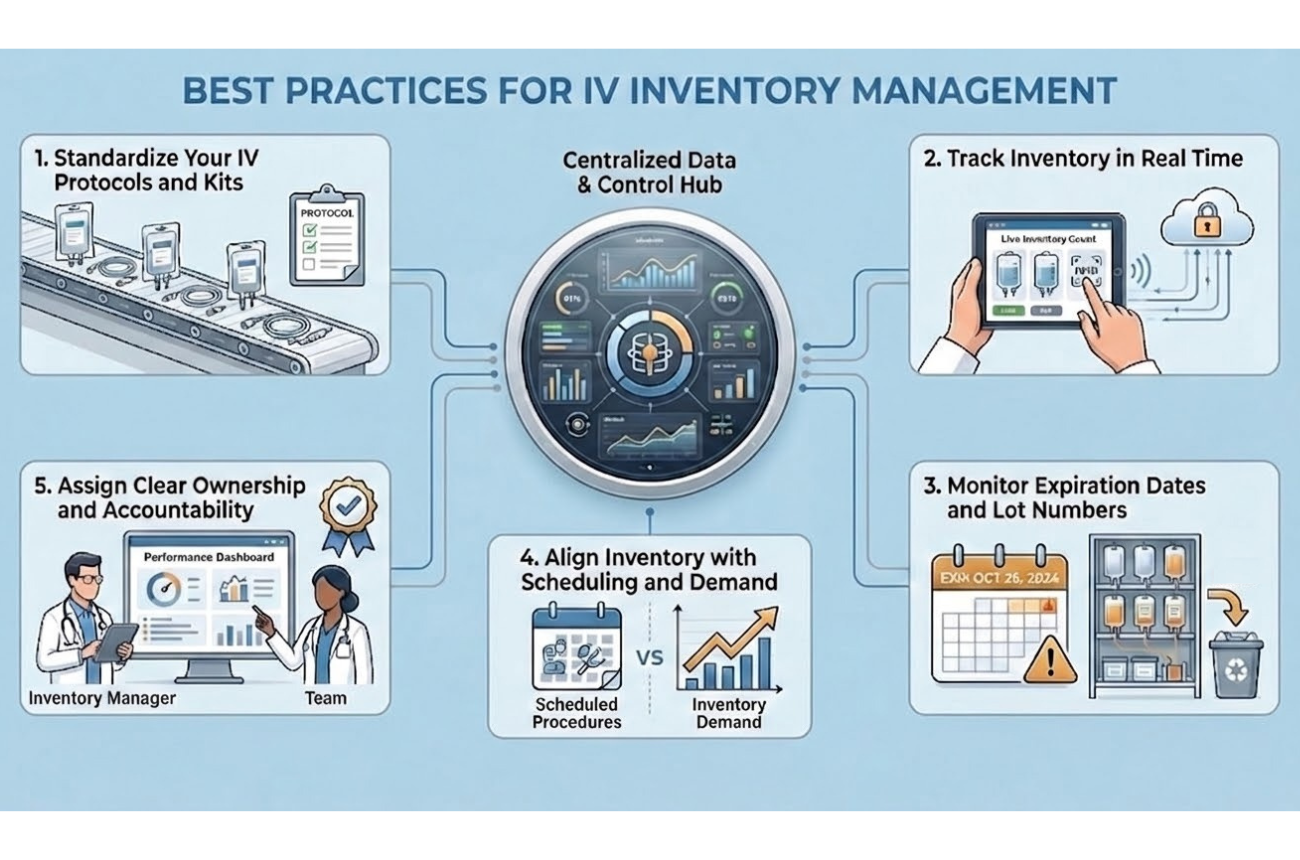
Best Practice #1: Standardize Your IV Protocols and Kits
One of the easiest and most effective ways to improve IV inventory control is to standardize your treatment offerings. When clinics offer a clear, defined set of IV protocols, inventory planning becomes significantly more predictable and manageable.
Standardization allows clinics to move away from ad hoc mixing and inconsistent supply usage. Instead, each IV service is built around a documented protocol with predefined components, quantities, and preparation steps. This creates a reliable foundation for both clinical care and fulfillment operations.
With standardized IV protocols, clinics can:
- Accurately forecast inventory needs based on appointment volume and treatment mix
- Create repeatable IV kits for hydration, immunity, recovery, or specialty infusions
- Reduce overuse or underuse of vitamins and additives caused by variation between providers
- Improve fulfillment speed and accuracy during busy clinic hours
- Simplify staff training and onboarding by using consistent protocols
Importantly, standardization does not eliminate personalization. Instead, it establishes a baseline protocol that can be safely customized with add-ons or dosage adjustments when clinically appropriate. By anchoring customization to a standard framework, clinics maintain flexibility without sacrificing inventory control or documentation clarity.
Clinics that standardize early often find that inventory management shifts from reactive to proactive, reducing last-minute shortages, minimizing waste, and supporting scalable IV service growth.
Best Practice #2: Track Inventory in Real Time
Manual tracking methods—such as spreadsheets or end-of-day counts—often fail to reflect what’s actually happening in a busy IV clinic. Real-time inventory visibility is essential for maintaining accurate fulfillment and avoiding disruptions to care.
When inventory levels update as treatments are administered, clinics gain a clear, current picture of supply usage across providers and services. This makes it easier to respond to demand before shortages occur.
Effective real-time IV inventory tracking allows clinics to:
- Monitor stock levels immediately as IVs are prepared and delivered
- Identify low-stock items before they become urgent or impact scheduling
- Align inventory usage with actual patient volume and treatment mix
- Reduce last-minute rush orders, emergency purchasing, and backorders
Real-time tracking ensures inventory management keeps pace with clinical demand—especially during peak seasons, promotions, or periods of rapid growth. It also supports more confident ordering decisions based on data rather than guesswork.
Best Practice #3: Monitor Expiration Dates and Lot Numbers
IV therapy supplies often have strict expiration timelines and, in some cases, lot tracking requirements. Without a structured system in place, clinics risk unnecessary waste, treatment delays, or compliance concerns.
Proactive monitoring ensures that supplies are used safely, efficiently, and in the correct order.
Best practices for expiration and lot management include:
- Assigning and recording expiration dates when inventory is received
- Rotating stock using FIFO (first in, first out) principles
- Linking lot numbers to specific treatments when required
- Conducting routine inventory audits to identify soon-to-expire items
Having a system that supports structured inventory data makes it far easier to stay compliant while minimizing product loss. It also allows clinics to prioritize usage of expiring supplies and plan reorders more strategically.
Best Practice #4: Align Inventory with Scheduling and Demand
IV inventory management should never operate in isolation. Fulfillment works best when it’s closely aligned with scheduling patterns, provider availability, and anticipated patient demand.
By analyzing appointment data and treatment trends, clinics can make more informed inventory decisions that support growth instead of constraining it.
When inventory planning is aligned with scheduling, clinics can:
- Anticipate high-demand IV treatments based on booking trends
- Adjust ordering based on seasonal fluctuations or promotional campaigns
- Prepare inventory in advance for events, packages, or corporate wellness offerings
- Prevent overstocking of slow-moving or infrequently used items
This alignment ensures the right supplies are available at the right time—without tying up capital in excess inventory or risking fulfillment gaps during busy periods.
Best Practice #5: Assign Clear Ownership and Accountability
Even the best inventory processes can break down without clear ownership. IV inventory management works best when responsibility is explicitly assigned and supported by documented procedures.
Whether inventory oversight falls to a clinical lead, operations manager, or dedicated inventory coordinator, accountability ensures consistency and follow-through.
Best practices for ownership and accountability include:
- Assigning a primary individual responsible for ordering and reconciliation
- Establishing clear reorder thresholds and approval workflows
- Documenting receiving, stocking, and storage procedures
- Conducting regular inventory reviews and spot checks
Clear accountability reduces errors, improves communication between clinical and operations teams, and keeps IV fulfillment processes reliable as the clinic scales.
Common IV Inventory Mistakes Clinics Should Avoid
Even well-established and growing clinics can run into inventory challenges without clear, connected systems in place. IV therapy is uniquely sensitive to supply disruptions, and small oversights can quickly lead to operational headaches, wasted product, or delayed care.
Some of the most common IV inventory pitfalls include:
- Ordering based on guesswork instead of data
Relying on intuition or past habits rather than real usage patterns often results in overstocking low-demand items or running short on high-demand components. Without data tied to appointment volume and treatment mix, clinics are forced into reactive ordering that increases costs and fulfillment stress. - Failing to track expiration dates consistently
IV fluids, vitamins, and additives frequently have limited shelf lives. Inconsistent tracking leads to preventable waste, rushed usage of expiring supplies, or last-minute disposal of unused inventory. Over time, this can significantly impact margins and create compliance concerns. - Allowing too much variation in IV protocols
When providers mix treatments differently without standardized baselines, inventory usage becomes unpredictable. This variability makes forecasting difficult, increases the risk of errors, and complicates kit preparation, especially in multi-provider or multi-location clinics. - Managing inventory separately from clinical workflows
Inventory systems that operate in isolation from scheduling, documentation, and treatment delivery quickly fall out of sync with reality. When usage isn’t tied directly to patient encounters, stock levels become inaccurate, leading to shortages, duplicate orders, or missed replenishment opportunities.
Avoiding these mistakes helps clinics maintain consistent care delivery, reduce waste, and protect profitability. More importantly, it allows IV inventory management to function as a strategic support system—rather than a constant source of operational friction.
How OptiMantra Helps Clinics Stay on Top of IV Inventory Fulfillment
OptiMantra is an EMR and practice management system that is purpose-built to support the real-world operational demands of IV therapy, wellness, and integrative clinics—where inventory management is inseparable from clinical care. Rather than treating inventory as a standalone function, OptiMantra connects it directly to patient treatments, scheduling, and documentation.
With OptiMantra, practices can:
- Track IV inventory alongside patient treatments, ensuring supplies are accounted for as services are delivered rather than reconciled after the fact
- Align inventory usage with clinical workflows, so vitamins, fluids, and disposables are tied directly to standardized protocols and provider documentation
- Maintain organized, audit-ready records that support compliance, physician oversight, and internal reviews
- Support standardized IV protocols and kits, making inventory forecasting and fulfillment more predictable
- Improve visibility across locations and teams, helping multi-provider or multi-site practices maintain consistency and control
By centralizing inventory management within the same system used for scheduling, charting, and treatment delivery, OptiMantra eliminates manual handoffs and data gaps. Clinics gain clearer insight into what’s being used, when, and why—allowing them to anticipate needs, reduce waste, and avoid last-minute fulfillment issues.
As IV programs grow in volume and complexity, OptiMantra helps clinics scale confidently, keeping inventory aligned with care delivery and ensuring they’re always prepared to meet patient demand without disruption. Try a free trial or schedule a live demo today!
IV Inventory Management FAQs
What is IV inventory management in a med spa or wellness clinic?
IV inventory management is the process of tracking, organizing, and replenishing IV therapy supplies to ensure accurate fulfillment, patient safety, and operational efficiency.
Why is IV inventory tracking important for fulfillment?
Accurate tracking prevents shortages, reduces waste, supports compliance, and ensures clinics can deliver IV treatments without delays or disruptions.
How can clinics reduce IV supply waste?
Clinics can reduce waste by standardizing IV protocols, tracking expiration dates, rotating stock properly, and aligning inventory with appointment volume.
What should be included in an IV inventory system?
An effective system includes real-time stock tracking, expiration monitoring, lot tracking when needed, reorder thresholds, and integration with treatment workflows.
How does OptiMantra support IV inventory management?
OptiMantra supports IV inventory management by connecting inventory tracking with clinical documentation and operational workflows, helping clinics stay organized and fulfillment-ready.
Legal Disclaimer: This article is for informational purposes only and does not constitute medical, legal, or regulatory advice. Inventory handling, storage, and documentation requirements for IV therapy vary by jurisdiction. Clinics should consult appropriate professionals and regulatory authorities to ensure compliance with all applicable laws and standards.