Running a medical or wellness practice is exciting—but it’s also a juggling act. Between patient care, administrative duties, billing, and scheduling, many providers find themselves stretched too thin. That’s where an office manager can make a world of difference. But how do you know when it’s time to hire one, and what should you look for in the ideal candidate? This guide will help you decide whether an office manager is right for your practice and outline steps to hire effectively.
Signs Your Practice Needs an Office Manager
- Administrative Bottlenecks
If staff are constantly overwhelmed by scheduling conflicts, patient calls, and insurance paperwork, it’s a sign your operations need central oversight. An office manager can streamline workflows and ensure tasks are completed efficiently. - Revenue Challenges
Missed billing opportunities, delayed claims, or errors in collections can affect your bottom line. Office managers specialize in financial oversight, helping you maintain steady cash flow while reducing costly mistakes. - Staff Overload
Your team may be talented, but when every staff member is handling both clinical and administrative tasks, burnout becomes likely. An office manager alleviates pressure, allowing your team to focus on patient care. - Growth Goals
If your practice plans to expand services, add providers, or open new locations, an office manager ensures your operations scale smoothly without disruptions to patient experience.
Responsibilities of an Office Manager
An office manager is the operational backbone of your practice. Their responsibilities may include:
- Staff supervision and training
- Scheduling and patient flow management
- Billing, collections, and insurance coordination
- Inventory management
- Compliance and regulatory oversight
- Vendor and technology management
By handling these functions, an office manager frees providers to focus on delivering high-quality patient care.
What to Look for in a Candidate
When hiring an office manager, look for someone who has:
- Experience in healthcare administration – familiarity with medical billing, EMR systems, and HIPAA compliance is essential.
- Strong leadership skills – the ability to manage staff, resolve conflicts, and make operational decisions.
- Organizational and tech skills – proficiency with scheduling software, EMR systems, and office management tools.
- Problem-solving abilities – the capability to anticipate challenges and streamline processes proactively.
- Excellent communication – both with patients and the internal team, ensuring clear expectations and smooth operations.
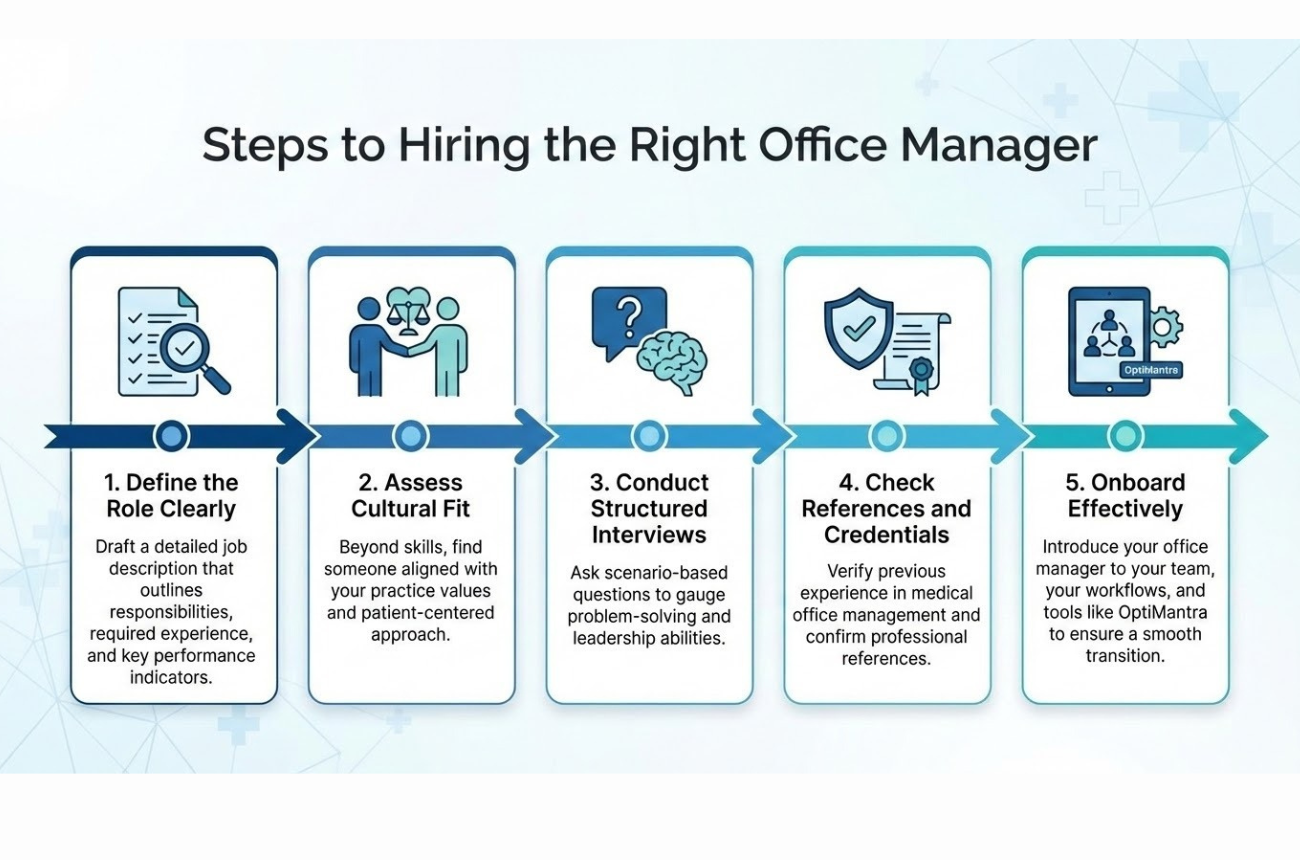
Steps to Hiring the Right Office Manager
- Define the Role Clearly
Draft a detailed job description that outlines responsibilities, required experience, and key performance indicators. - Assess Cultural Fit
Beyond skills, find someone aligned with your practice values and patient-centered approach. - Conduct Structured Interviews
Ask scenario-based questions to gauge problem-solving and leadership abilities. - Check References and Credentials
Verify previous experience in medical office management and confirm professional references. - Onboard Effectively
Introduce your office manager to your team, your workflows, and tools like OptiMantra to ensure a smooth transition.
How Technology Supports Office Management
Modern practice management software, such as OptiMantra, empowers office managers to operate efficiently. With an integrated EMR and scheduling system, managers can:
- Oversee appointments and patient flow in real time
- Track billing and insurance claims with minimal errors
- Generate reports to monitor staff performance and financial health
- Ensure regulatory compliance and secure patient data
By leveraging the right technology, your office manager can transform your practice from reactive to proactive, freeing your providers to focus on patient care.
Setting Your Practice Up for Its Next Chapter
Hiring an office manager is a strategic move for growing practices. They reduce administrative burdens, improve workflow efficiency, and support financial stability—all while creating a better experience for your patients and staff. With a clear hiring plan and the support of integrated software like OptiMantra, bringing an office manager on board can be one of the most impactful decisions for your practice’s growth.
Ready to streamline your operations and support your growing team? Book a demo or sign-up for a free trial with OptiMantra’s today!